STRUCTURAL REHABILITATION OF A CULVERT UNDER A RAILWAY TRACK
- Client : Société ferroviaire de la Gaspésie
- Réalisation : 01/08/2025



Secure a strategic railway infrastructure
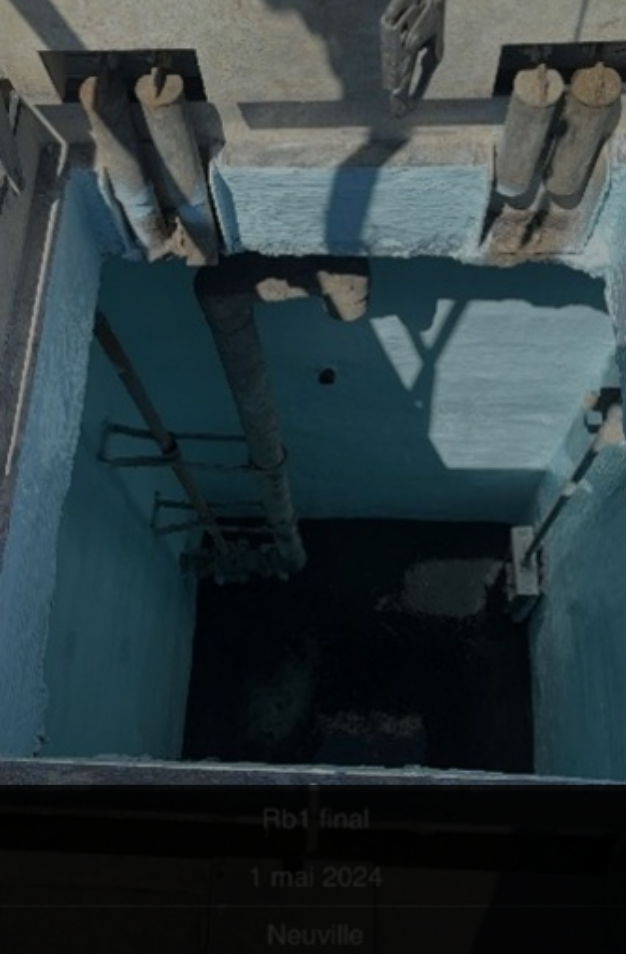
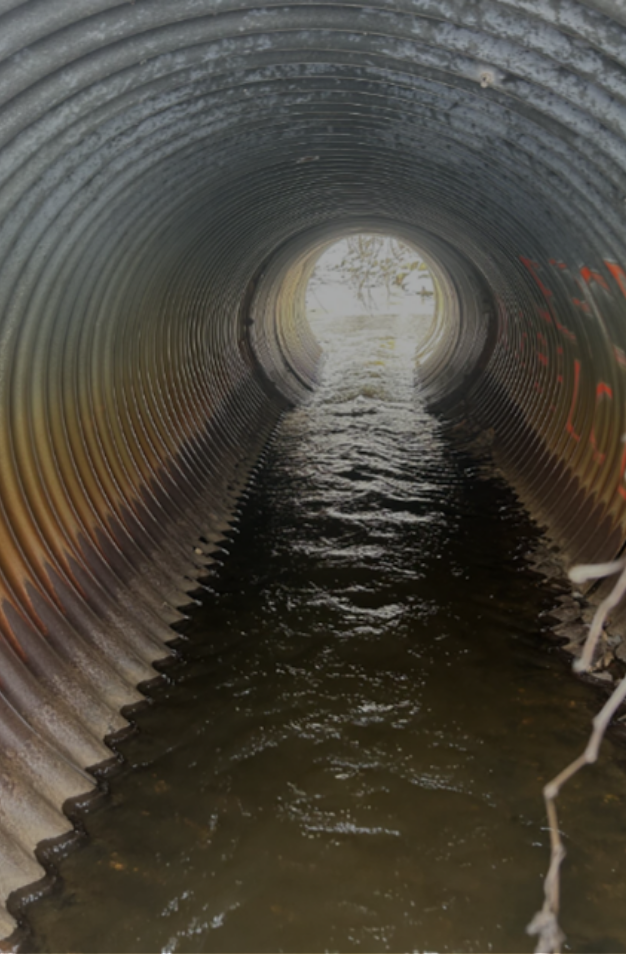
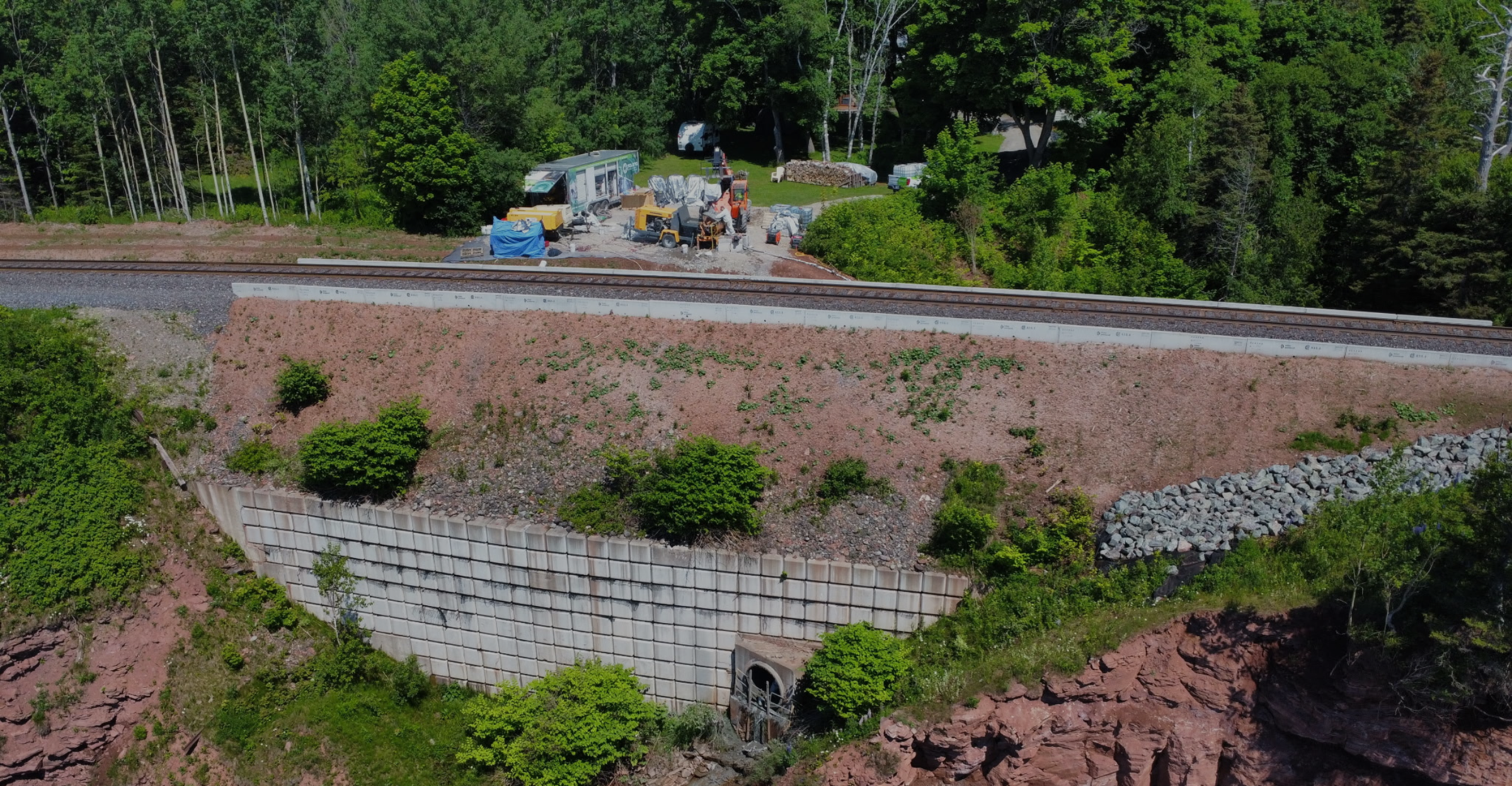
The Société ferroviaire de la Gaspésie called on Soleno Service to address a significant issue affecting a culvert located directly beneath an active railway track. The structure was a 1500 mm-diameter conduit, spanning 32 linear meters and buried at a depth of 8.5 meters — conditions that limited accessibility and increased the risk of structural failure.
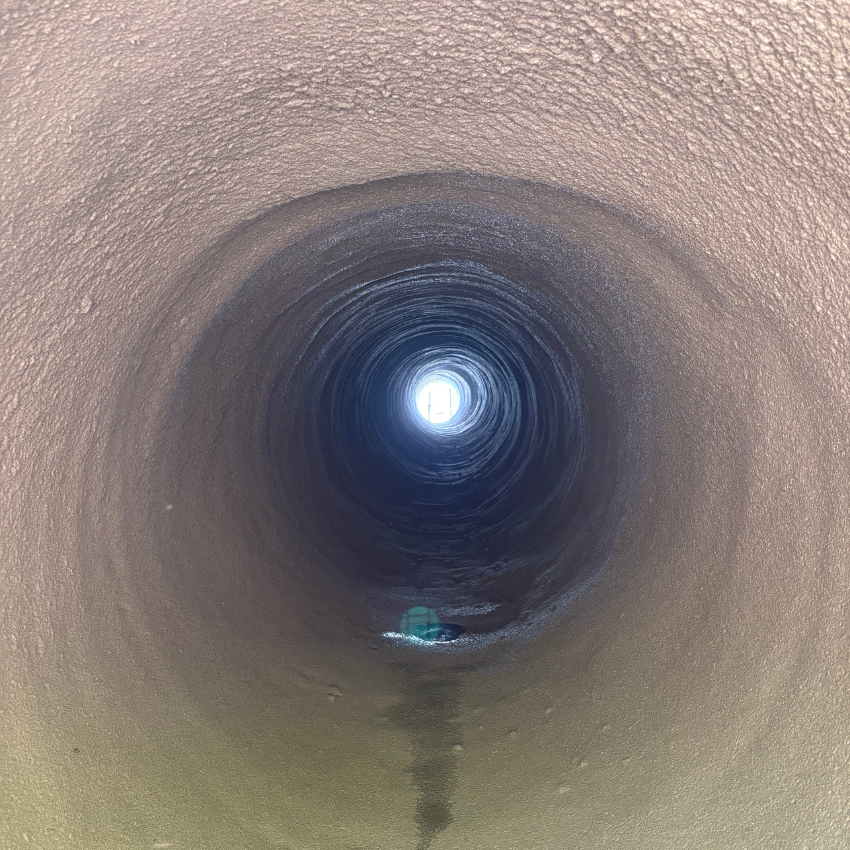
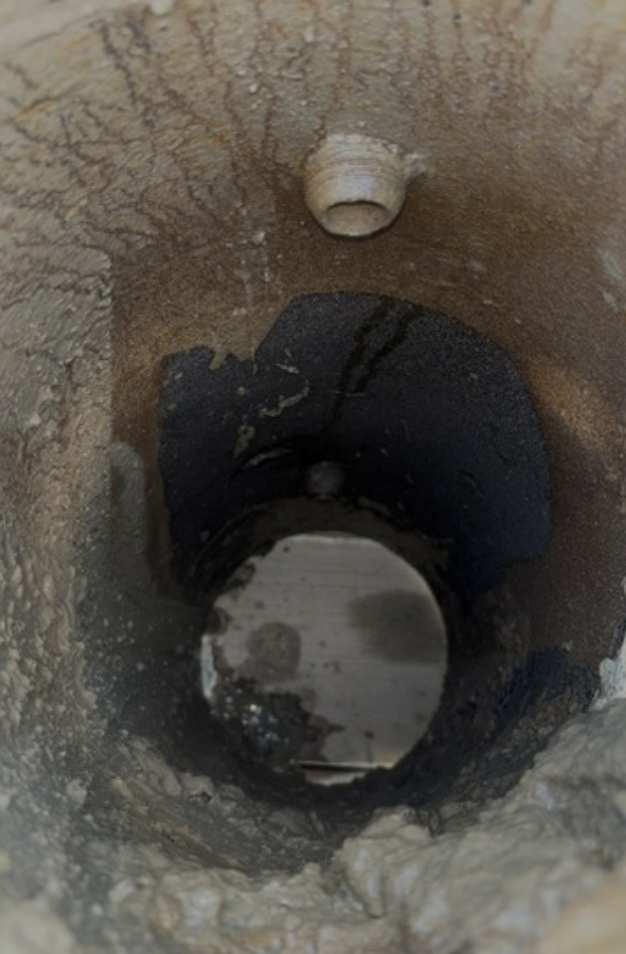
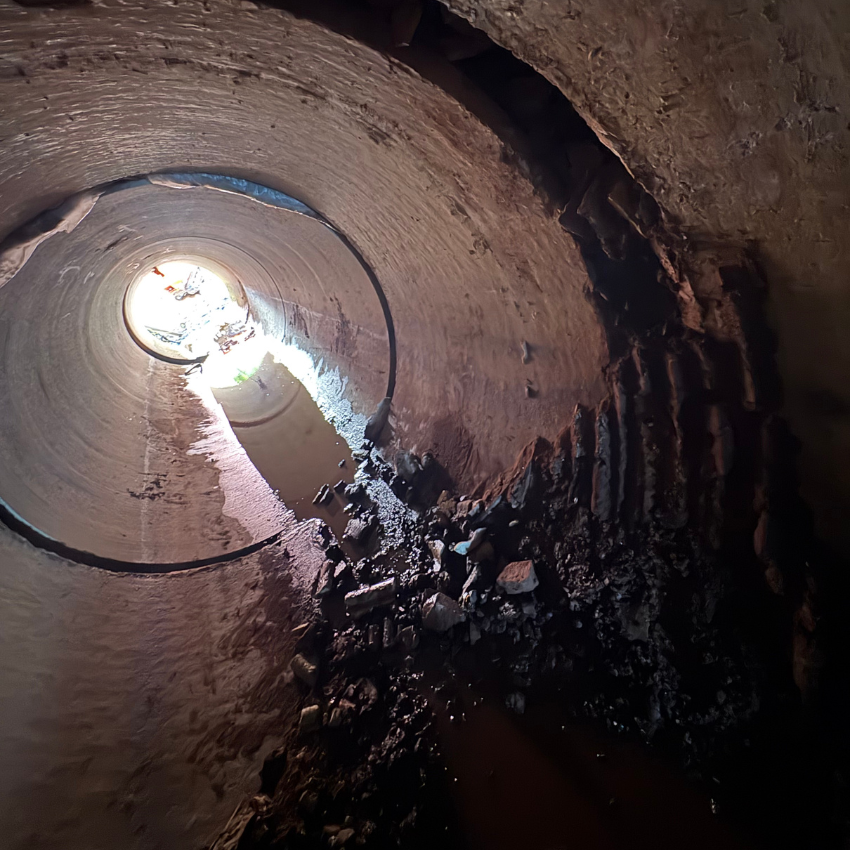
The culvert exhibited two major signs of distress: visible weakening of the conduit itself and significant separation of the joints across all 12 sections. Given the depth and the railway environment, a no-dig (no excavation) solution was required to avoid disruption of rail operations.
Restoring the integrity of a deep, degraded, segmented culvert under load
The culvert faced progressive loss of load-bearing capacity, aggravated by section displacements that compromised watertightness, heavy loads imposed by rail traffic, and geotechnical constraints related to deep burial.
Any rehabilitation approach had to meet strict requirements: fully restore vertical load capacity, stabilize joints between sections, be deployable under limited access conditions, and ensure long-term durability.
To tackle both the structural weakening and the joint separation, Soleno Service implemented a two-part rehabilitation strategy.
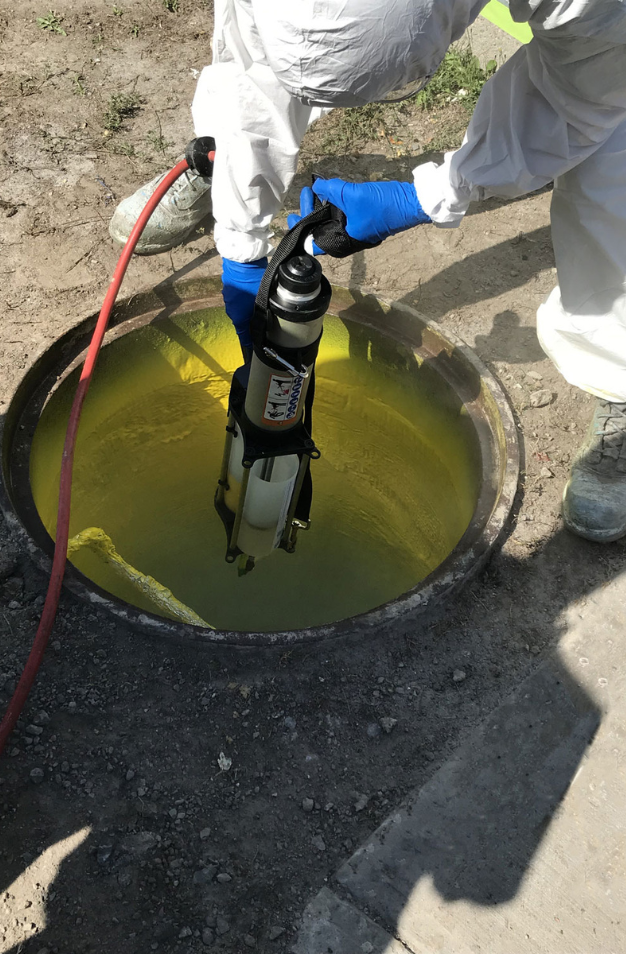
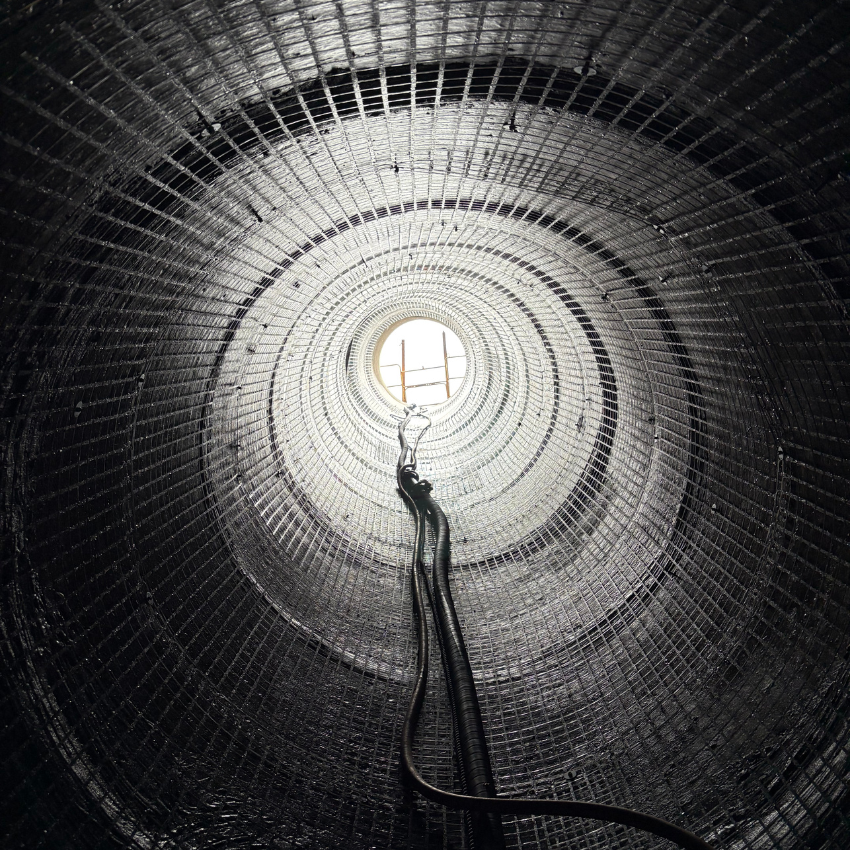
First, carbon-fiber reinforcement (C-Grid) was installed to stabilize the interfaces between the 12 culvert sections, preventing further movement and joint separation.
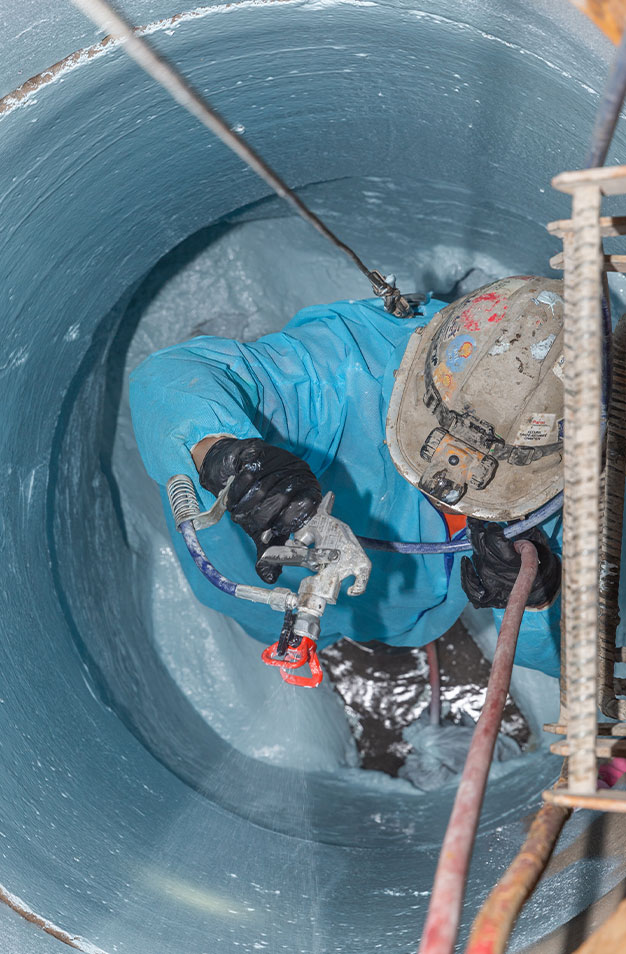
Then, a 40 mm layer of geopolymer was sprayed along the interior of the entire conduit, forming a new internal structural lining capable of bearing 100% of the vertical loads from rail traffic. This high-performance material provided mechanical uniformity, enhanced waterproofing, and excellent resistance against corrosion and abrasion.
Despite the 8.5 m depth and the complexity of the railway environment, the entire operation was done without excavation, ensuring minimal disruption to rail service.